Agent Ops Patterns
Who decides what inside an AI agent - code, a model, or a person? This free gallery maps it for open-source agents, one judgment at a time, starting with OpenHands. The skill to map your own comes with it.
Overview
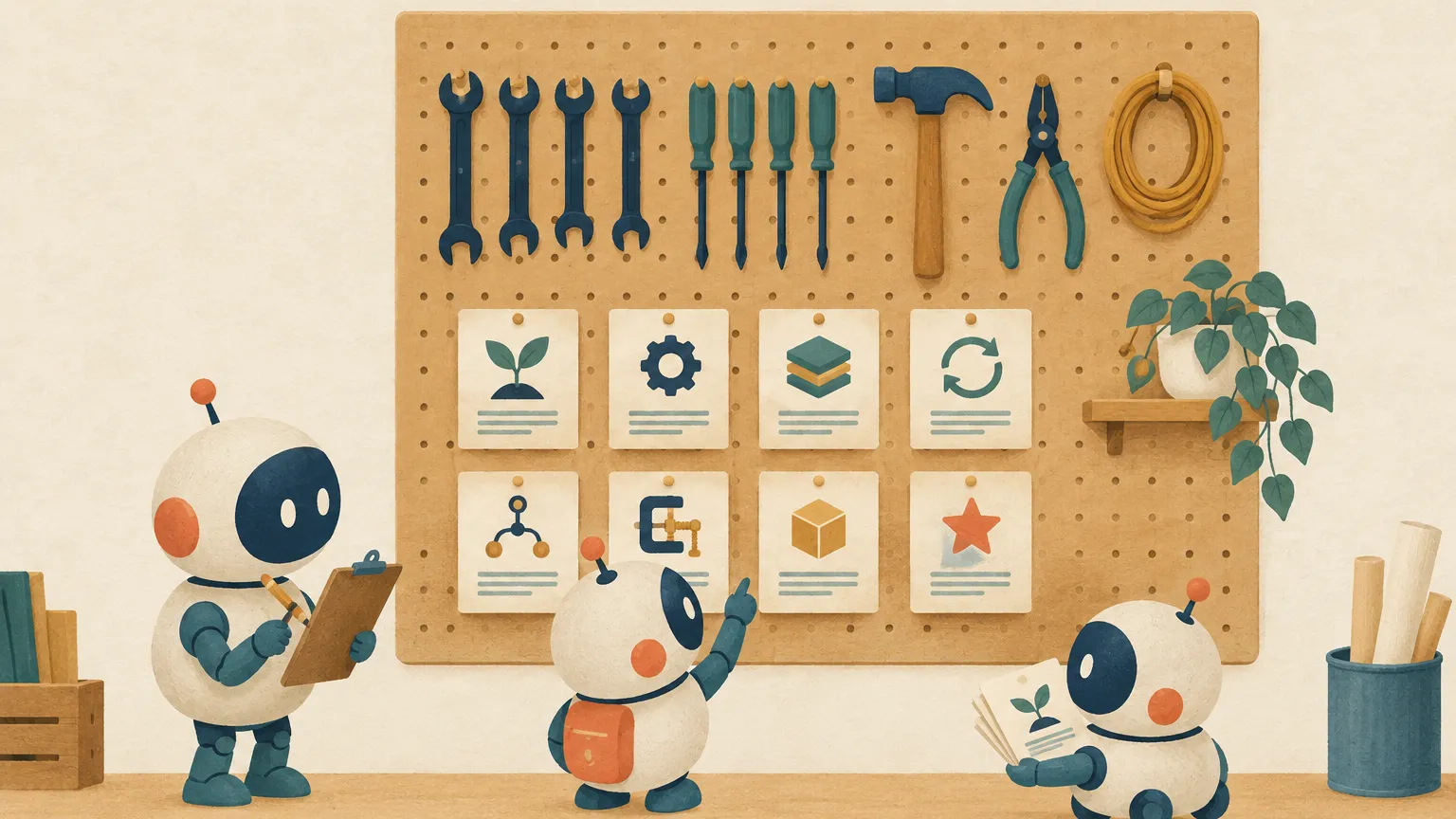
Agent Ops Patterns is a public gallery of cognitive operations maps. Each map takes one open-source agent system and lists its recurring judgments as seats: the question each one answers, who holds it (code, a model, or a person), how it has failed, and what checks it. Where a model holds a seat, the map identifies the prompt pieces behind it, and every map ends with a report of the gaps the mapping exposed.
The first map covers the OpenHands agent SDK: 171 seats and 70 gap entries, all read at one commit from 2026-10-06. Gaps that were reproduced with tests went to the project as public issues first. Each map is one self-contained HTML file you can read in the browser or export as Markdown.
The same repository holds the skill that maps your own system, a five-question audit you paste to your agent, and small tested libraries. A map is a reading of code at one commit, not a security audit.
Why I built it
I run my software portfolio through a lot of AI agents, and the question I kept failing to answer was simple: which decisions is a model making, and what catches it when it's wrong? Org charts and process docs don't say where the judgment sits. So I started writing it down, seat by seat - first for my own systems, then for open-source agents anyone can check.
How it works
1. Open a map - start from the gallery; each map opens in your browser as one page 2. Read the seats - each card names the question, who holds it, how it has failed and what checks it 3. Check the gaps - each entry says whether it was reproduced with a test or read from the source 4. Map your own - install the skill in Claude Code and ask your agent to map a system you work on
Feature highlights
- Seat cards - one card per recurring judgment, sorted rule vs ruling and human vs machine.
- The prompts behind the seats - model-held seats point to their prompt pieces; 14 OpenHands cards quote the source text, linked to its lines.
- A gap report - what the mapping exposed, each entry marked reproduced or read from source.
- Findings shared first - reproduced gaps are reported to the project in public, and the map names the issues.
- Markdown export - hand a whole map to your own assistant.
- Map your own - the cog-ops-map skill installs as a Claude Code plugin.
- Five-question self-audit - paste one prompt to your agent and it scores your setup out of five, read-only.
Pricing
Free and open source under the MIT license.
Notes
- For whom: People building or running AI agent systems, and teammates who need to see where the judgment sits without reading the code.
- How it's built: Static pages on GitHub Pages; each map is a single HTML file that makes no external requests.
You might also like
Agentic Directory
LiveNeed an AI tool that actually does the work? Describe your situation and get one honest pick, free. Agentic Directory scores more than 450 tools on a public 36-point rubric, and nobody can pay to move a score.
Agentic Directory
BloomEDU
LiveLooked up a wildflower on one hike and forgot it by the next? BloomEDU names the plant from your photo, then quizzes you on it just before you'd forget, until the name is yours. Free to start.
BloomEDU
Reframed
LiveTired of news that already knows what you should think? Reframed gives you each morning's top stories with the agreed facts first, then how the left and the right each read them, with sources.
Reframed